
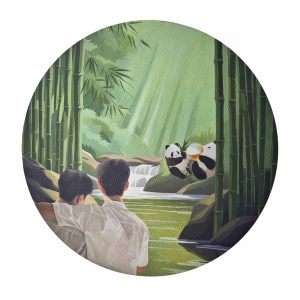
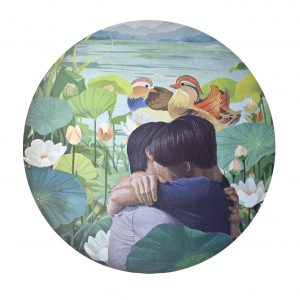
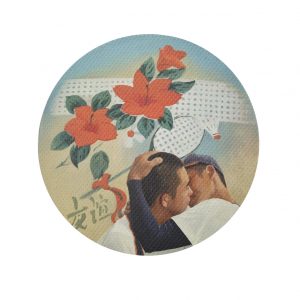
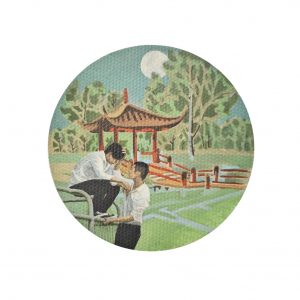
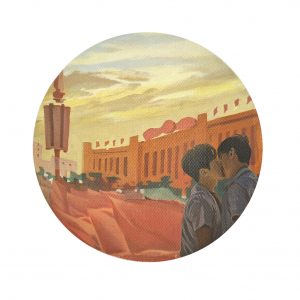

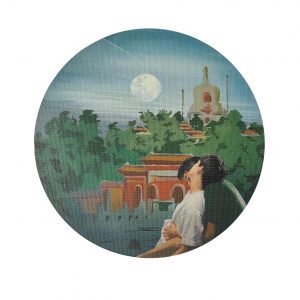
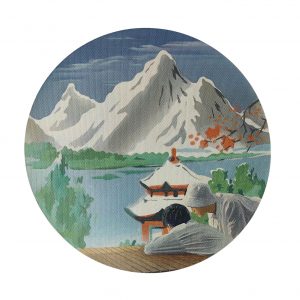
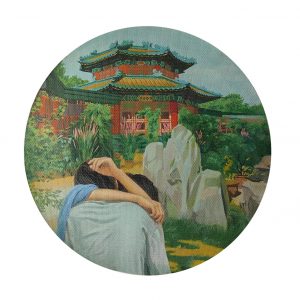
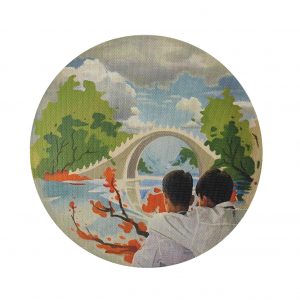
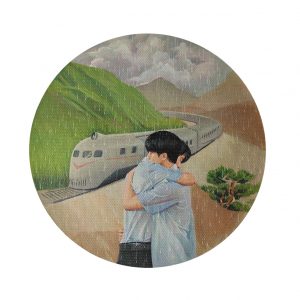
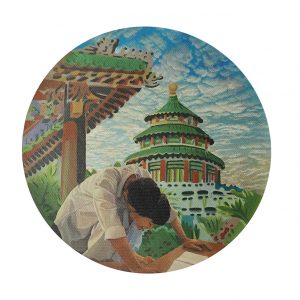
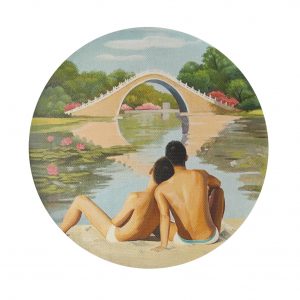
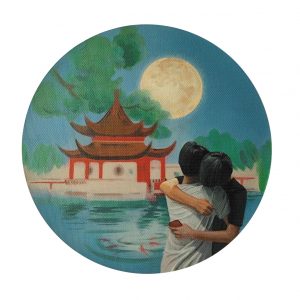
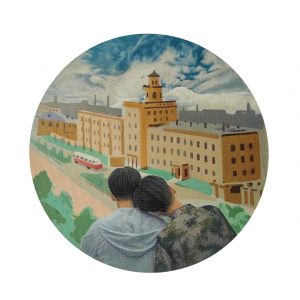
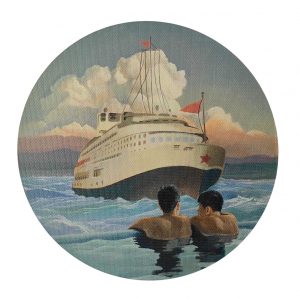
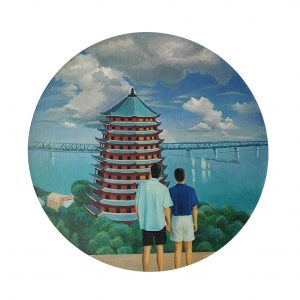
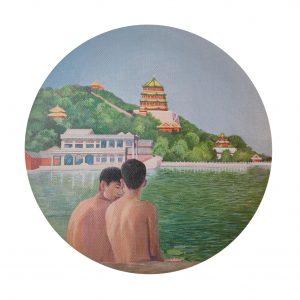
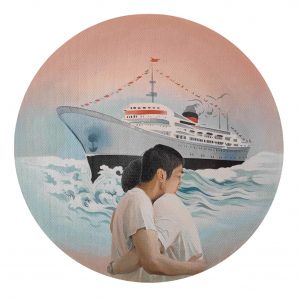
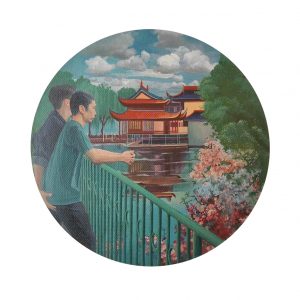
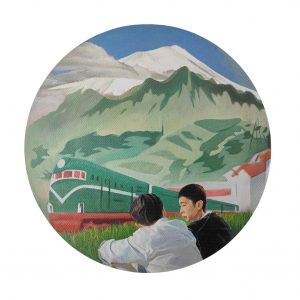
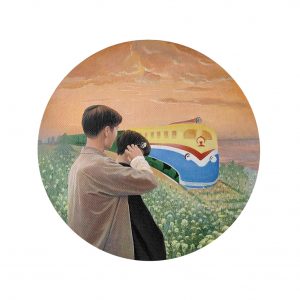
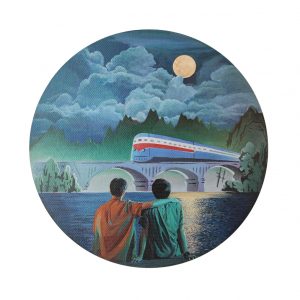
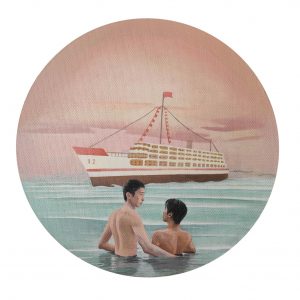
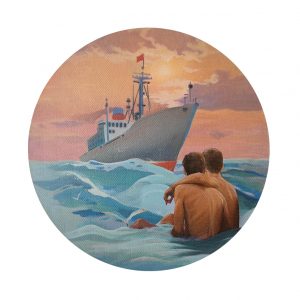
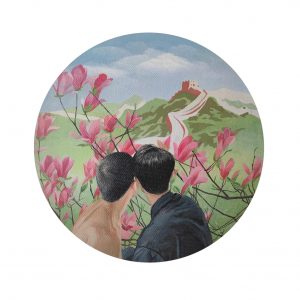
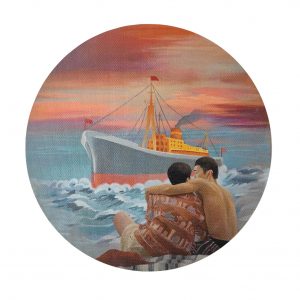
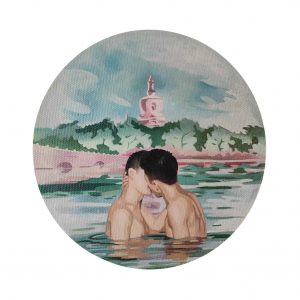
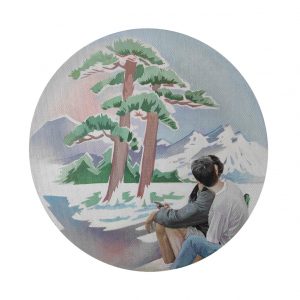
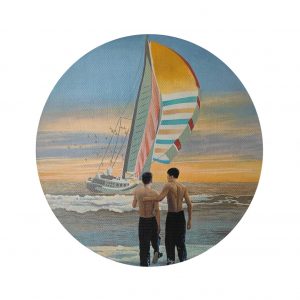
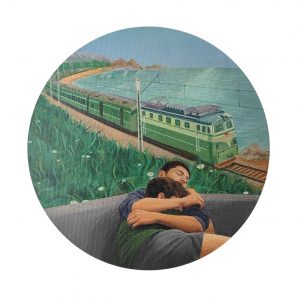
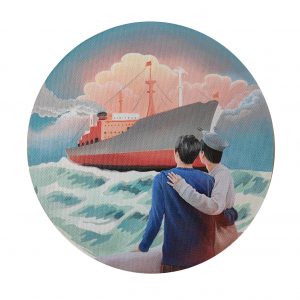
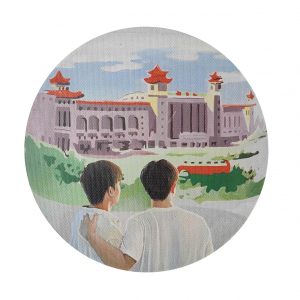
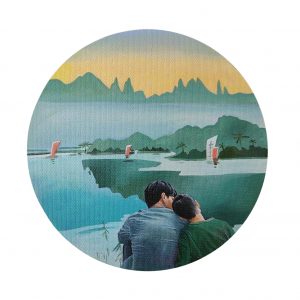
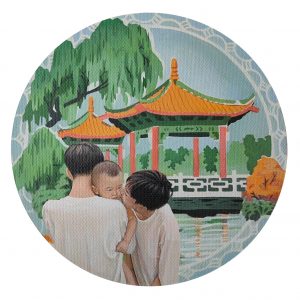
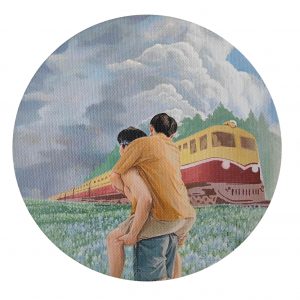
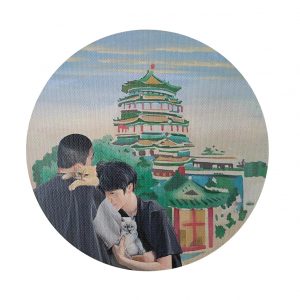
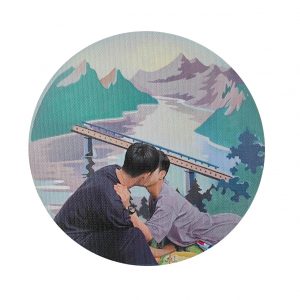
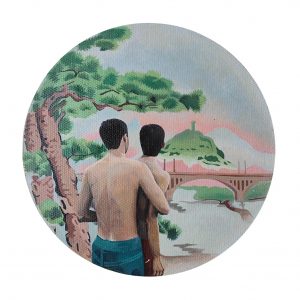
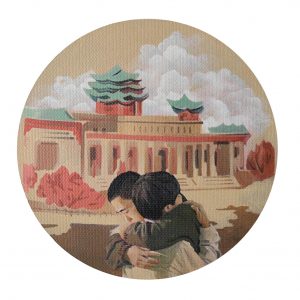
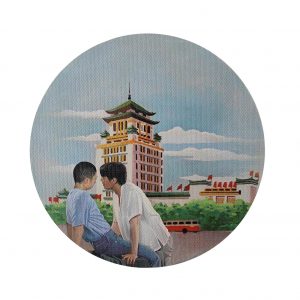
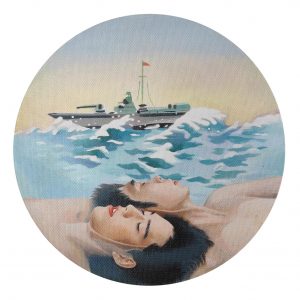
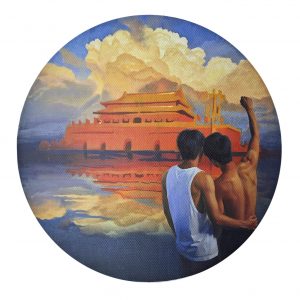
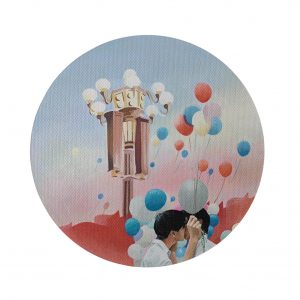
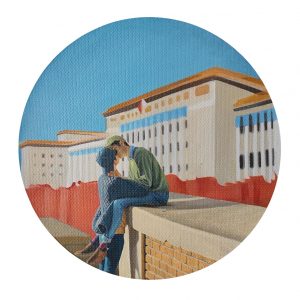
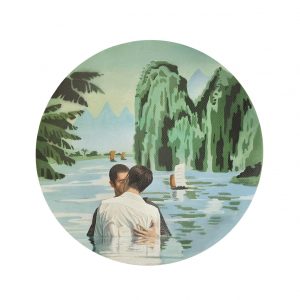
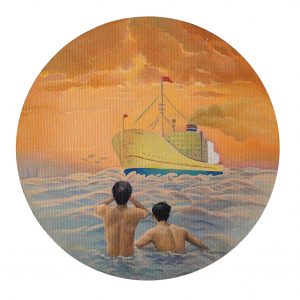
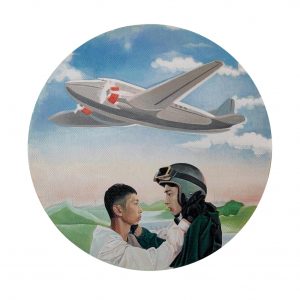
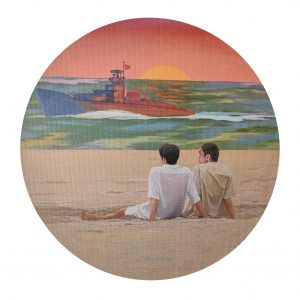
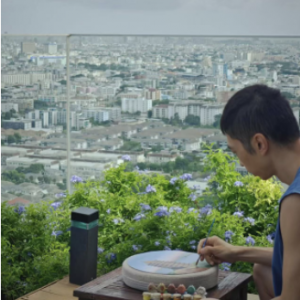
Wang Zibai is a Chinese painter born in the 1980s, known for his poignant depictions of love and intimacy between men, as well as his explorations of urban memory.
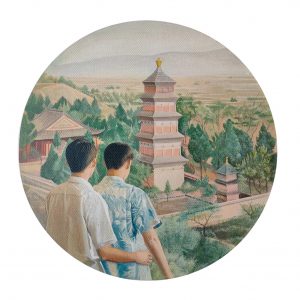
In 2001, Wang Zibai was a student at one of Beijing’s most prestigious universities. Beneath the iconic Boya Pagoda, he fell in love with another young man who was equally sensitive and strong-willed.
In the social climate of that era, and under the weight of particular circumstances, living openly with such an identity in China could be dangerous and profoundly isolating. After his partner passed away, Wang Zibai neither disappeared nor fell silent. Instead, he chose to quietly preserve their shared memories through painting: love, equality, dignity, and the desires that, though suppressed, had never truly been extinguished.
His paintings are not works of fiction. They are a deeply personal testimony to how one individual, confronted with immense social pressure and personal loss, continued to assert his identity and find the courage to say, “This is who I am.”
王子白是一位以描绘男性同性情谊与城市记忆而闻名的80后画家。2001 年,王子白曾是北京一所顶尖大学的学生,在博雅塔下,他爱上了一个同样敏感而倔强的男孩。
他们在现实的缝隙里偷偷相爱,在北京大学未名湖的树荫下读书、争论自由。
因为深处的年代和特殊情况,这种身份在中国的生活变得危险和孤立。男友去世后,王子白没有消失,也没有沉默,他选择偷偷画下曾经的一切:爱、平等和尊严,还有那些被压住却始终没有熄灭的渴望。
他的画不是虚构,而是一个人如何在压力重重的人生中,坚持说出“我是谁”的过程。