THE
SHAPE
IS A MOMENT
Part II
形瞬
Artist
艺术家
Ni Zhiqi
倪志琪
Sook Jin JO
赵婌真
Yuan Kan
袁侃
Gao Ruyun
高入云
Wu Muhan
吴牧寒
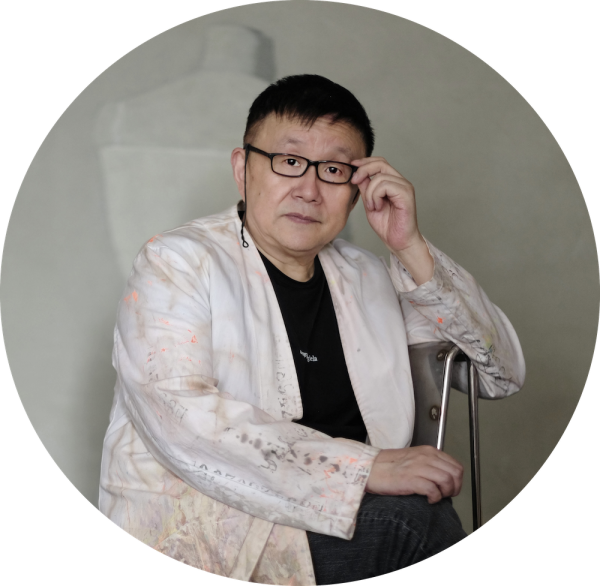
Commented by Ben Xia Tian
特邀评论:夏天
Period 时间
12 Sep – 27 Dec, 2026
Venue 地点
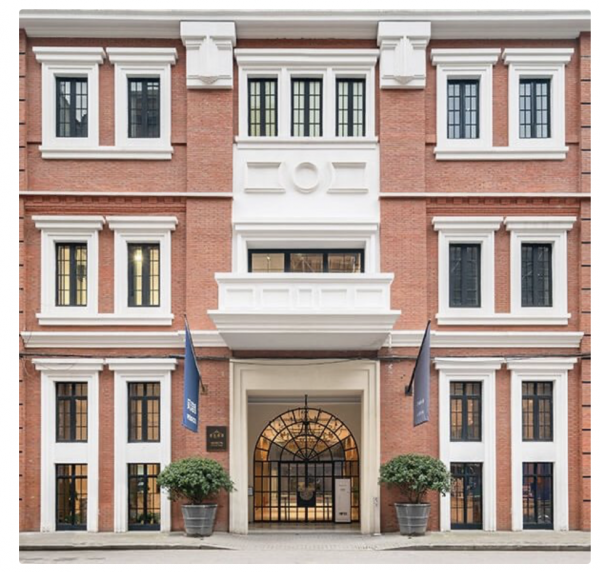
上海市黄浦区虎丘路27号 2F07
2F07, No.27 Huqiu Road, Huangpu District, Shanghai
–
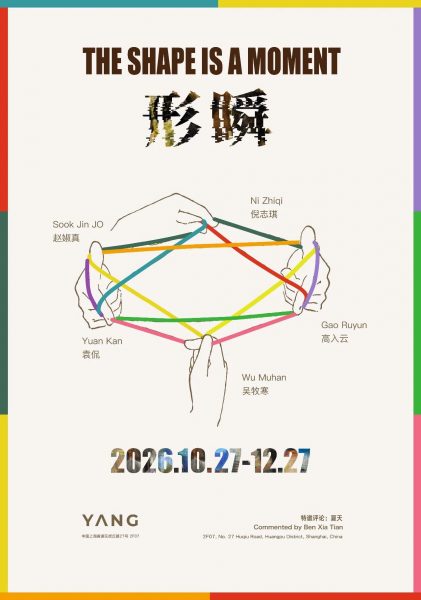
YANG Gallery is pleased to announce The Shape Is a Moment: Part II, a group exhibition on view from Oct 27 to December 27, 2026. The exhibition brings together paintings, works on paper, sculptures, and installations by Ni Zhiqi, Sook Jin Jo, Yuan Kan, Gao Ruyun, and Wu Muhan.
The exhibition takes its title from a line by American poet and Pulitzer Prize winner George Oppen: “The shape is a moment.” For Oppen, one is continually moving between reading and rereading, and form emerges in the interval created by this movement. It is neither a permanently fixed contour nor a static fragment severed from time. More often, it is the moment when dispersed perceptions suddenly acquire order: the eye apprehends a particular relationship within the world, and form appears; as the gaze continues to shift, that relationship opens onto further possibilities. The Shape Is a Moment brings form and temporality into close relation within the exhibition space, revealing the moments in which form comes into order.
Within the aesthetic context of modernism, form gradually shifts from an object’s inherent appearance to the way perception organizes the world. We never apprehend an object in its entirety in a single gaze. It reveals itself to us gradually, through changing aspects, distances, light, movement, and backgrounds. The form that vision captures is the provisional order these conditions produce at a particular moment. It possesses a certain definiteness, yet also carries within it what has not yet appeared. Seeing is constituted by the body’s acts of entering into the world. The position of the eyes, the movement of the body, the object’s call to us, and changes in the surrounding space all participate in the emergence of the visible. Each present moment also carries traces of the immediate past and anticipations of what is to come. Thus, “Form in the Instant” points not to the transience of form, but to the way form takes shape only through particular encounters. The works in this exhibition continually seek to capture the forms of such encounters, in turn revising the judgments viewers have already formed.
The poet George Oppen titled his first collection Discrete Series, first published in 1934. Borrowing a mathematical term, he conceived of poetry as a series of discrete terms, each grounded in concrete experience and retaining its own truth. His lines are consequently marked by breaks, pauses, and blank spaces. Rather than being governed by a predetermined overarching statement, their meanings emerge through arrangement, intervals, and rereading. In this group exhibition, “形瞬,” the works of five artists likewise constitute a set of discrete terms: grids, collage, volume, lines, and readymades retain their respective material logics while inviting fresh readings within the exhibition space. If poetic meaning is grounded in individual moments of experiential truth, viewers here may likewise find assurance that they have indeed seen something. Form thus embodies a modest ethics of looking: remaining faithful to what is before us, and allowing it to appear as something partial, provisional, and still open to change.
Commented by Ben Xia Tian
–
 Ni Zhiqi 倪志琪
The Vacuum series marks a significant stage in his artistic development, tracing his gradual shift from figurative representation toward a purer form of abstraction. The works are characterized by expansive fields of color, simplified geometric structures, soft edges, and richly textured surfaces. The chair is another recurring motif in Ni Zhiqi’s practice. In his work, it is more than an everyday object: it serves as a medium between people and space, presence and absence. An empty chair suggests someone who was once there or has yet to arrive, while bearing traces of time, memory, and lived experience.
Ni Zhiqi arranges distinct units of color in an order approaching a grid. Recurring squares establish a steady rhythm through their scale and placement, while creases, wear, and remnants of imagery in fabric, paper, packaging materials, and old printed matter lend each unit its particular character. Color thus acquires a material presence: through these traces, the materials bring their past into the present. Each composition is held together by discrete parts, ordered in their arrangement yet unfolding through their details.
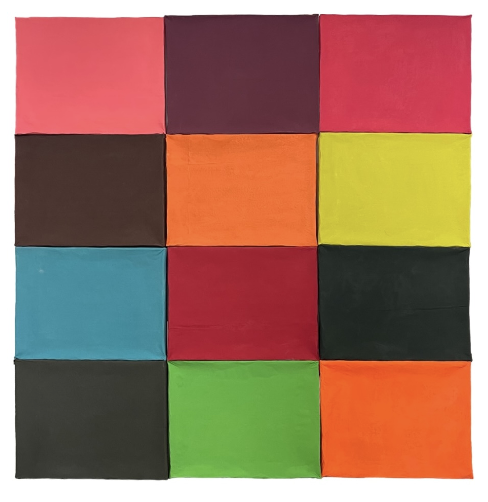
Vacuum & World
240 × 240 cm · 60 × 80 cm × 12 pieces · 2026
Mixed Media
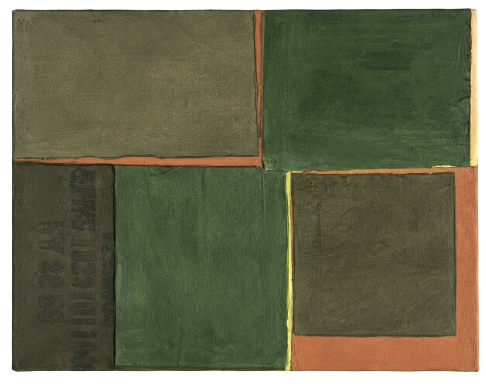 Horizont
60 × 80 cm · 2026
Mixed Media
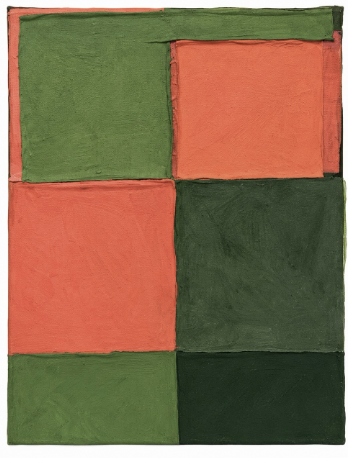 Horizont
80 × 60 cm · 2026
Mixed Media
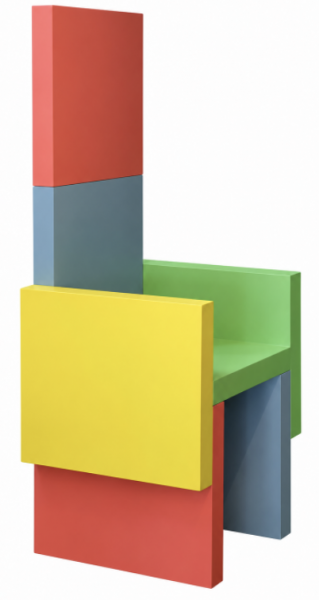
Vacuum Chair
125 x 55 x 45cm
Mixed media 2021
—
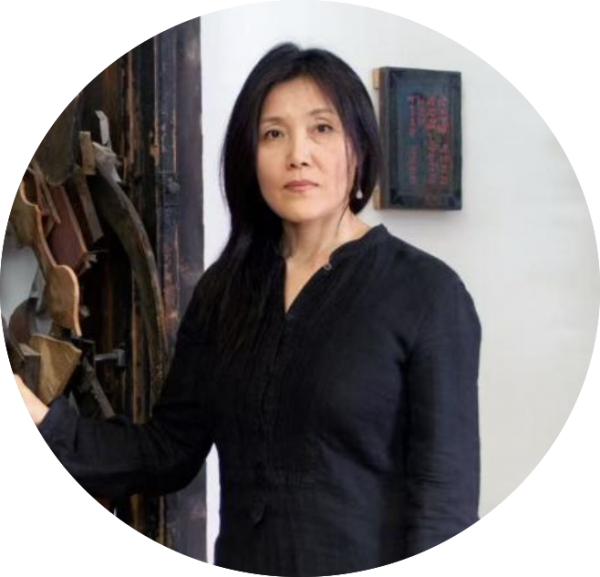 Jook Jin JO 赵婌真
Born in South Korea and currently based in New York, Sook Jin Jo is an interdisciplinary artist whose practice encompasses drawing, collage, photography, assemblage sculpture, performance, installation, public art, and architectural design.
Jo established her artistic career by creating sculptures from reclaimed materials. More precisely, she collects materials on site and then returns them to their original locations, transforming them into sculptural installations. She has a remarkable ability to uncover distinctive qualities in found objects, and her assemblages give new life to both the materials and their surroundings. Across her extensive body of sculptures, installations, and site-specific works—often using transformed abandoned spaces as their setting—she reveals that creation does not necessarily involve making something entirely new, but rather reconfiguring what already exists and giving it a second life through a new context.
Her work is held in numerous public and private collections, including the Metropolitan Detention Center in Los Angeles, California; the National Museum of Modern and Contemporary Art, Korea; the Seoul Museum of Art; the Erie Art Museum in Pennsylvania; and the Margulies Collection at the Warehouse in Miami.
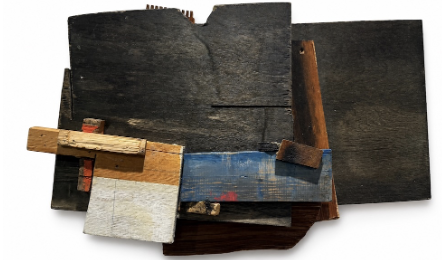
Narrow is the Way III
35 × 61 × 8 cm · 2024
Oil and Mixed Media on Wood
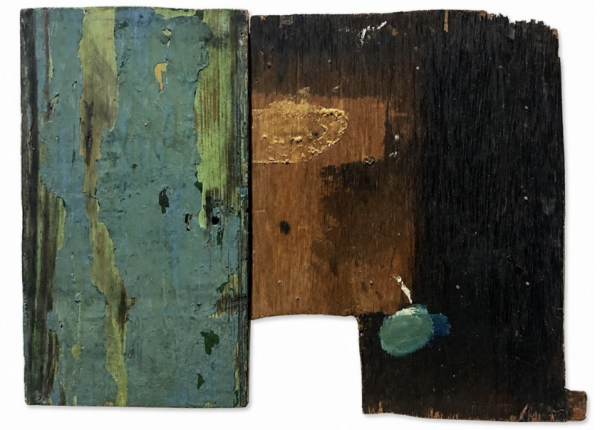
The Reason the Desert is Beautiful is Because a Well is Hidden Somewhere
36.5 × 51 × 4.3 cm · 1996
Oil and Mixed Media on Wood
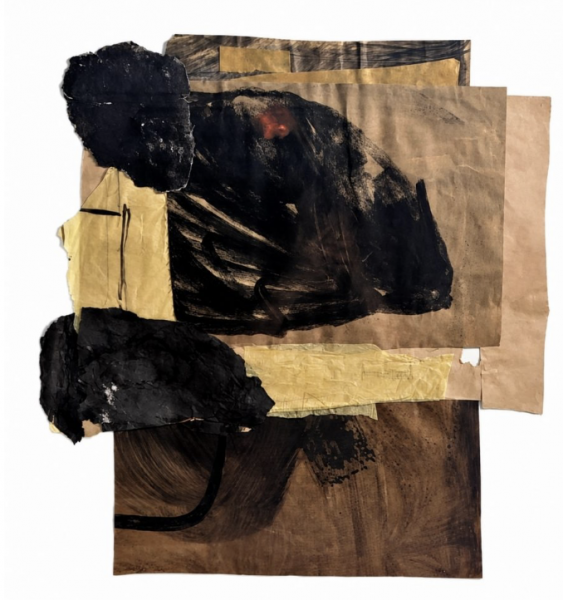
Shanghai Black Series
54 x 59cm
Mixed Media on Paper
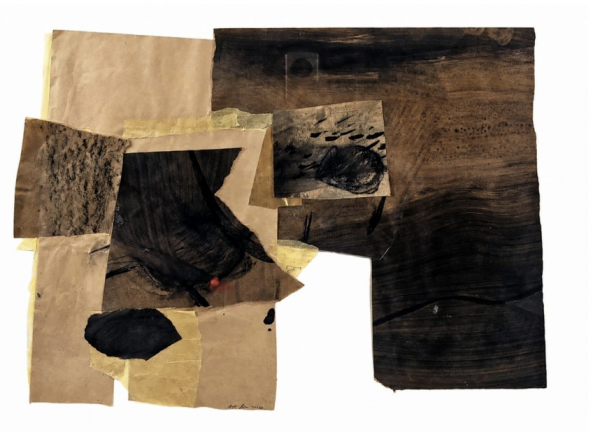
Shanghai Black Series
41 x 56cm
Mixed Media on Paper
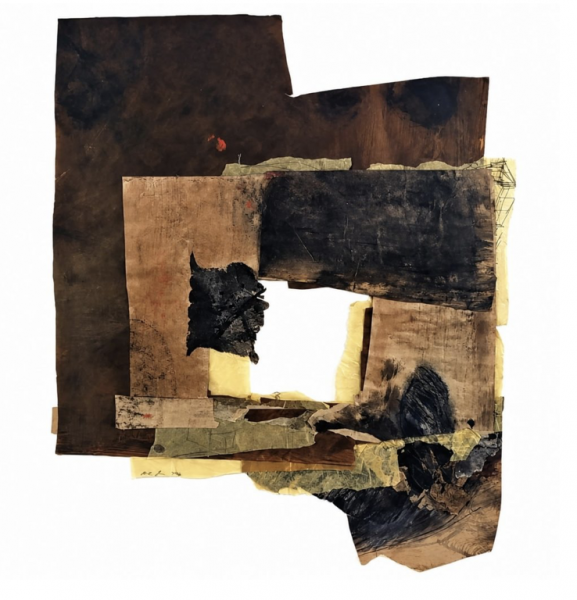
Shanghai Black Series
52 x 64cm
Mixed Media on Paper
–
 Yuan Kan 袁侃
Born in Shanghai in 1971, Yuan Kan is a Chinese contemporary artist whose practice encompasses painting, sculpture, mixed-media installation, and other forms. Moving between the three-dimensional and the two-dimensional, as well as the figurative and the abstract, he combines diverse media and materials to forge a distinctive artistic trajectory.
Yuan’s work is characterized by a highly individual approach to both visual expression and conceptual inquiry. He emphasizes uncertainty and mystery in art, as well as the importance of preserving spaces that resist communication at the margins of an age of information overload—spaces capable of offering refuge for the inner self. In his abstract works, recognizable images have largely disappeared or receded from view, giving way to powerful abstract metal sculptures.
As a contemporary artist and experimental practitioner, Yuan engages with the historical development of Chinese contemporary art while continually expanding the boundaries of expression through new forms and an abstract visual language. His work is often interpreted as a mode of personal narrative and spiritual inquiry within the context of contemporary China. Emotion and personal experience provide the driving force behind his practice; an abstract yet expressive language serves as its vehicle; and the construction of an inner space remains its ultimate destination.
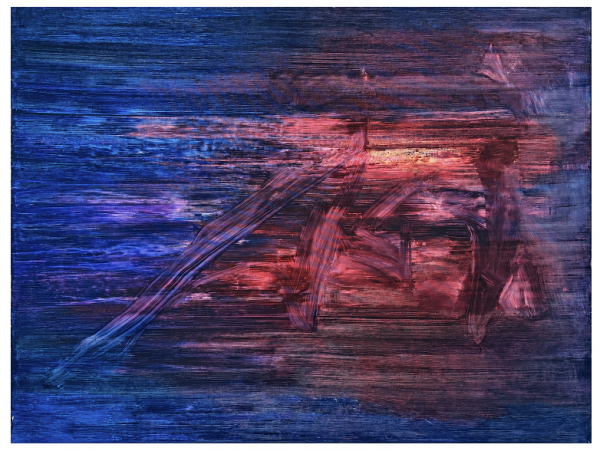
Sleepwalk 梦游
150 × 200 cm · 2024
Acrylic on Canvas
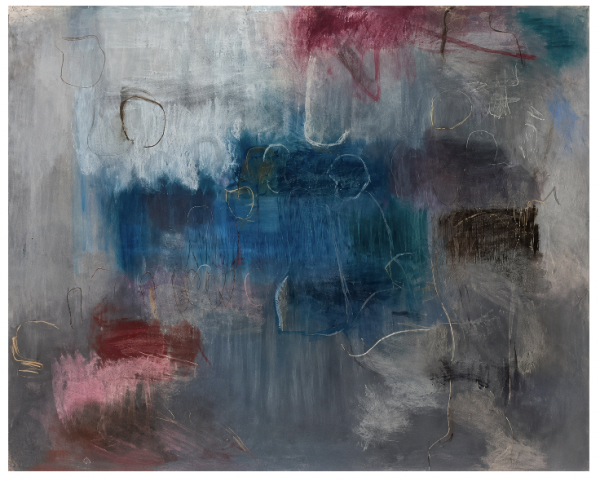
The Player 入局者
88 × 110 cm · 2024
Pastel on Paper 纸本色粉
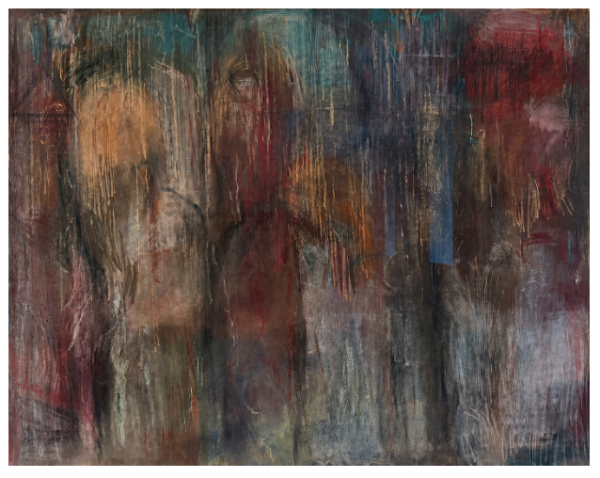
Western Wall
85 × 110 cm · 2024
Pastel on Paper
–
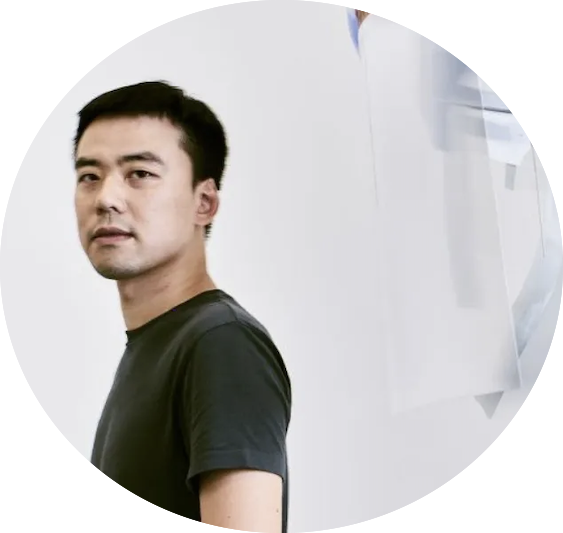 Gao Ruyun 高入云
Gao Ruyun, born in Shanghai in 1988, is a contemporary Chinese artist whose multidisciplinary practice spans installation, painting, photography and site-specific works. At its core is an ongoing investigation into the relationships between consciousness, perception, time, space and movement.
The line is the most distinctive element in Gao’s visual language and a recurring thread throughout his practice. Working with rope, fishing line, metal, acrylic and mechanical systems, he turns lines into carriers of movement, tension and rhythm. At times they follow precisely calculated trajectories; at others they deviate from a predetermined order under the influence of gravity, tension and chance. The works hold a subtle, continuous equilibrium between order and randomness, stability and transformation.
In Approaching, mechanically driven lines continuously form shifting geometric relationships in space. Moving slowly along predetermined paths, the lines approach, cross, and separate from one another, keeping seemingly stable forms in a constant state of flux. The work draws attention to subtle movements: viewers must linger to perceive changes in the positions of the lines and their spatial relationships. Time thus becomes an integral part of the work. Approaching unfolds as a continuous movement toward, with forms emerging and loosening through motion, allowing viewers to sense rhythm and tension beneath an appearance of near stillness.
In Consciousness, lines are stretched and suspended, finding equilibrium among multiple forces and giving invisible tension an almost tangible form.
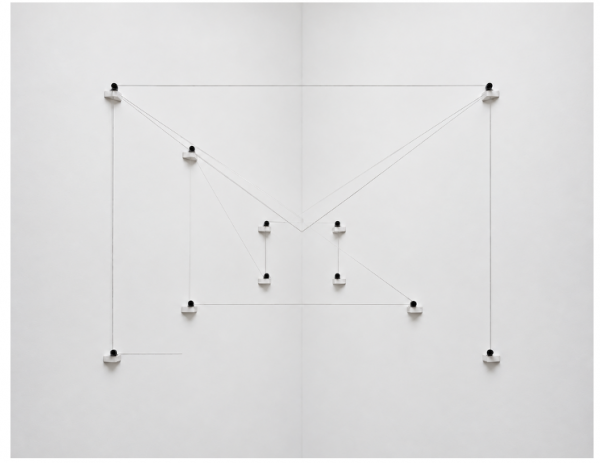
Approaching
Dimensions Variable · 2023
Nylon Rope, Fishing Line, Moror
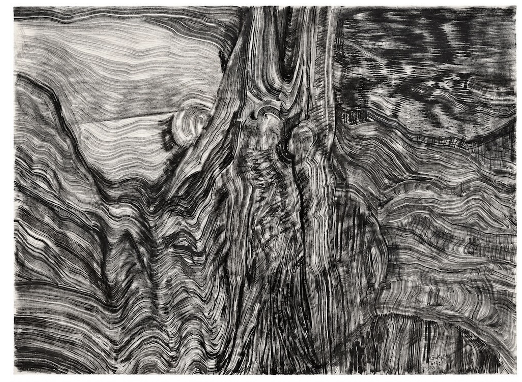
Consciousness – 3696
38 × 53cm · 2022
Ink on Paper
Consciousness – 3566
35 × 50cm · 2022
Ink on Paper
–
 Wu Muhan 吴牧寒
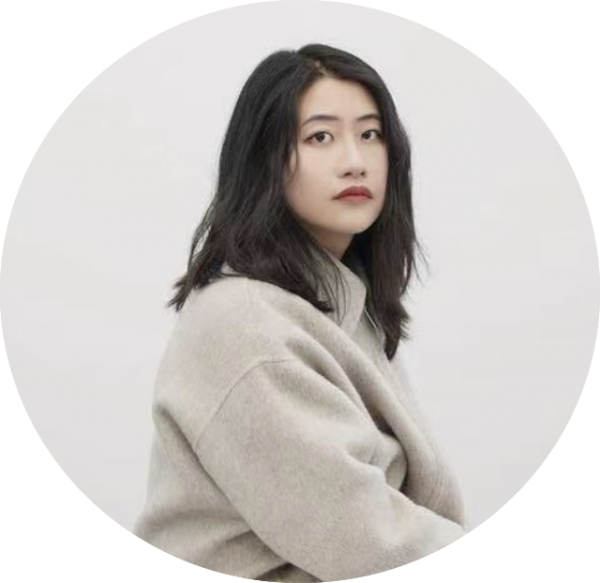
Wu Muhan B.1997, Quzhou Zhejiang. Now lives and works in Shanghai.
Wu Muhan’s artistic practice focuses on the dialectical relationship between creation and production, constructing a contemporary monument to material production through the selective reconfiguration of industrial products and everyday objects. The artist adopts a philosophical perspective, viewing interrelationships as the logical prerequisite for the construction of the objective world. His installation works often use discarded and obsolete found objects as carriers, blending materials with cold textures, fragile characteristics, and potential dangers to highlight the profound traces left by consciousness in the material world. In terms of creative methodology, Wu Muhan adopts a method similar to building with blocks, exploring the possibilities of meaning generation through the displacement, stacking, and deconstruction of objects, navigating between the predetermined and the accidental. The material elements in the works establish temporary connections based on their inherent structural characteristics.
In his creative methodology, Wu Muhan adopts an approach akin to building with blocks, exploring the possibilities for the emergence of meaning between the predetermined and the accidental through processes of displacement, stacking, and deconstruction. The material elements in his works form provisional connections based primarily on their inherent structural properties. These ephemeral and readily dismantled configurations reflect the artist’s profound reconsideration and questioning of the traditional sculptural notion of permanence.
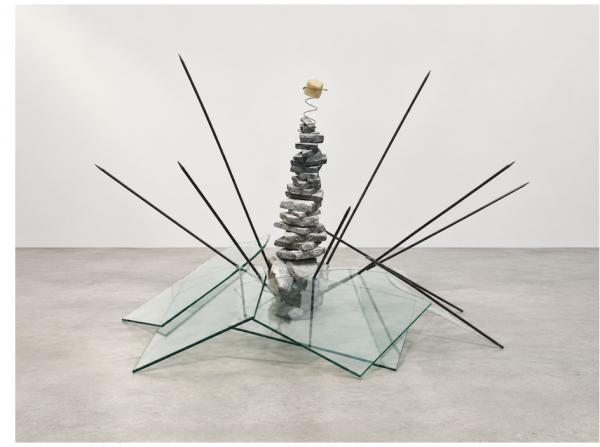
Untitled
Dimensions Variable · 2019
Mixed Media
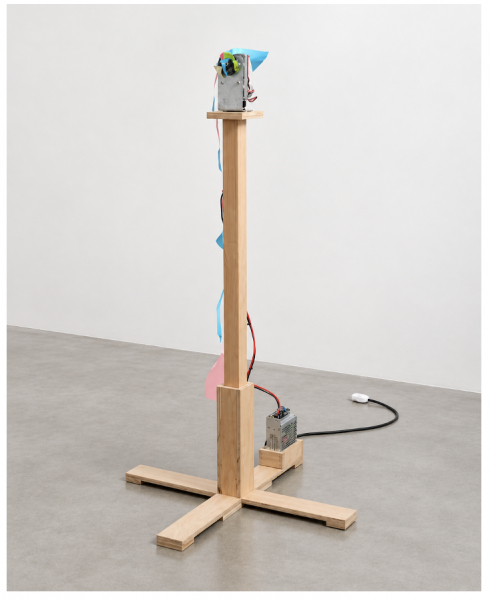
Three Sentences
107 × 60 × 60 cm · 2025
Wooden stand, motor, cut paper
–
Visit Us
2F07, No.27 Huqiu Road, Huangpu District, Shanghai
Mon-Sun, 11am – 7pm
Contact Us
📞+65 8389 1888 / +86 18811228968
Email: info@yanggallery.com.sg
www.yanggallery.com.sg
Visit Us
YANG • Singapore
01-11 voco orchard Singapore,
581 Orchard Road, Singapore 238883
YANG • Shanghai
2F07, No.27 Huqiu Road, Huangpu District,
Shanghai 200002
YANG • Beijing
No.1 Nan Hu, Song Zhuang Art Zone,
Tong Zhou District, Beijing 101118