
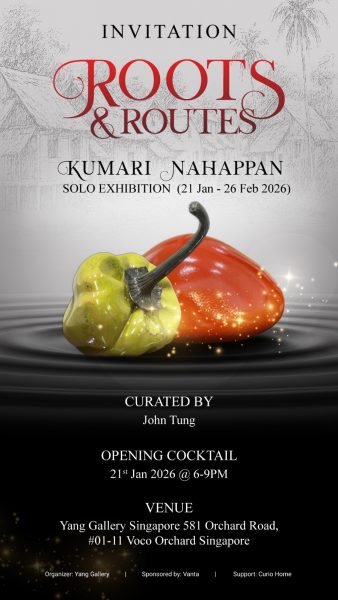
Yang Gallery is delighted to present Kumari Nahappan’s solo exhibition “Roots & Routes” Sinagpore 2026
Visit us at : 581 Orchard Road, #01-11 Voco Orchard Singapore.
For any collecting inquiries , please feel free to contact us at 83891888 or email us @
info@yanggallery.com.sg.
Alternatively, visit our website at www.yanggallery.com.sg.
Roots & Routes
About the Public Display
Kumari Nahappan (b. 1953, Klang, Selangor, Malaysia) stands as a seminal figure in the Singaporean art landscape. Celebrated for her interdisciplinary artworks that seamlessly blend contemporary flair with profound cultural narratives, her practice over the past three decades has engaged in international contemporary art dialogue while remaining deeply rooted in her heritage and beliefs. In reconciling these two worlds, she has crafted a visual identity uniquely her own, establishing an oeuvre shaped by a vocabulary rich in cultural nuance that resonates with a global audience.
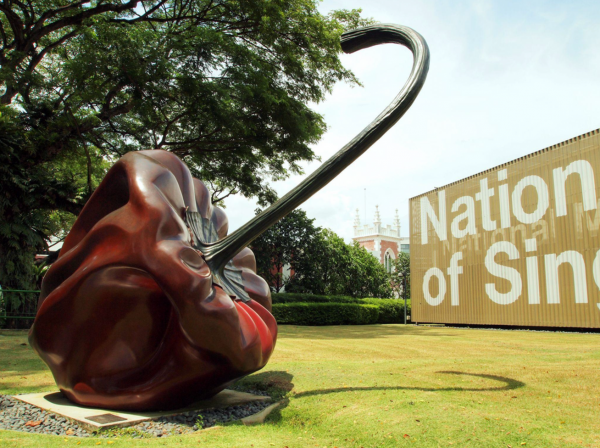
Pedas – Pedas
National Museum of Singapore, 2006
Pedas-Pedas (2006) is one of Kumari Nahappan’s earliest large-scale public sculptures, commissioned by the National Museum of Singapore and curated by Tay Swee Lin. Drawing from the Naturalist tradition that shaped her early studio practice, Kumari magnifies the humble chilli pepper into a monumental form; resting it directly on the museum lawn, as if it had tumbled down from nearby Fort Canning and come to rest like a ripening fruit.
Devoid of a pedestal, Pedas-Pedas was designed to sit in direct contact with the ground, enhancing its lifelike presence and reinforcing its connection to nature. This strategic placement and scale were intended to evoke both surprise and delight—transforming a familiar object into something fantastical. Kumari likened the experience to stumbling upon a “giant chilli-pepper,” an otherworldly encounter in the midst of the city, akin to Alice’s adventures in Wonderland.
The sculpture exudes weight and gravity, yet retains the playful energy and cultural resonance of the chilli—a recurring motif in Kumari’s work. It becomes a symbol of vitality, heritage, and spice—rooted in nature yet scaled to awe, inviting viewers into a moment of marvel and imagination.
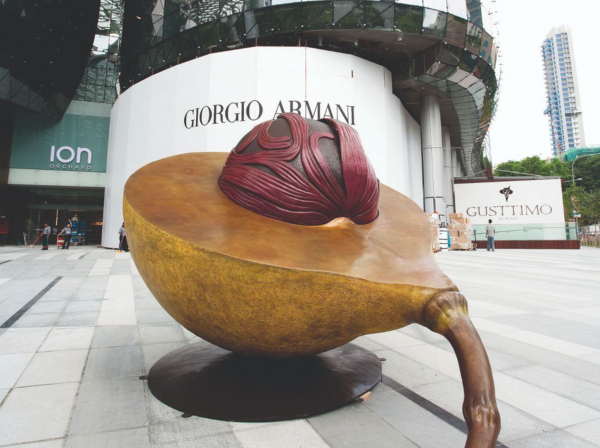
Nutmeg & Mace
Ion Orchard Singapore, 2009
Located at ION Orchard, Nutmeg & Mace by Kumari Nahappan connects Singapore’s bustling retail hub to its quieter past as a 19th-century nutmeg plantation. The two-tonne bronze sculpture depicts a split nutmeg revealing its crimson lace-like mace, capturing both botanical beauty and symbolic depth.
Once prized in the global spice trade, the nutmeg is a symbol of prosperity and duality—yielding both nutmeg and mace from a single seed. Kumari’s choice of this form reflects her ongoing exploration of nature, heritage, and identity. By placing the sculpture directly at the site of Orchard Road’s agrarian origins, she reanimates the ground with memory, transforming a commercial space into one layered with cultural resonance.
Few today recognise the nutmeg tree or its fruit, yet Kumari’s monumental rendering invites renewed curiosity. It pays tribute to a rich history of trade and the deep ties between land and community, while also celebrating the transformative power of nature. The sculpture stands as a reminder that behind every modern façade lies a story—rooted, fragrant, and enduring.
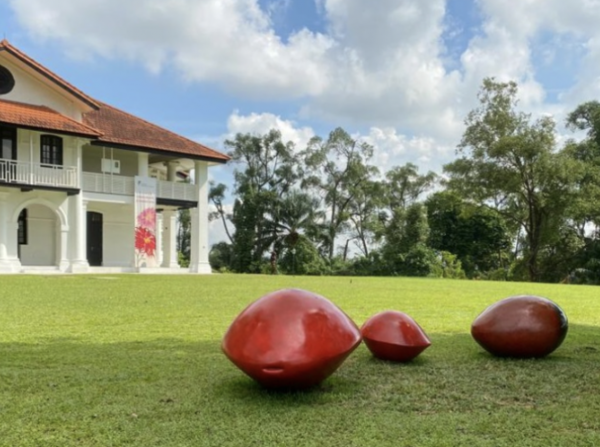
Biji Sayang
Botanic Garden Gallop Extension Singapore, 2022
An installation bringing together the family members of the Saga tree: the seeds of Adenanthera pavonine and its close relative, A.malayana. These seeds symbolise the promise of life.
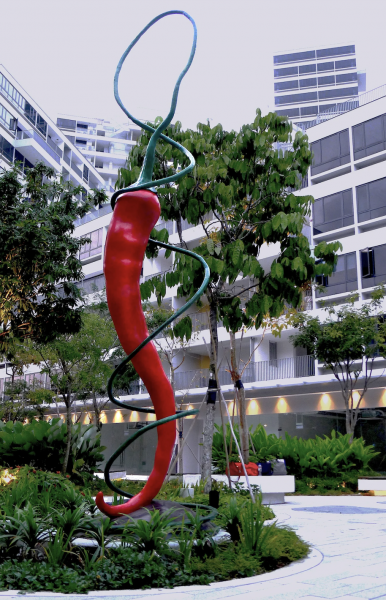
Twist
The Interlace Singapore, 2004
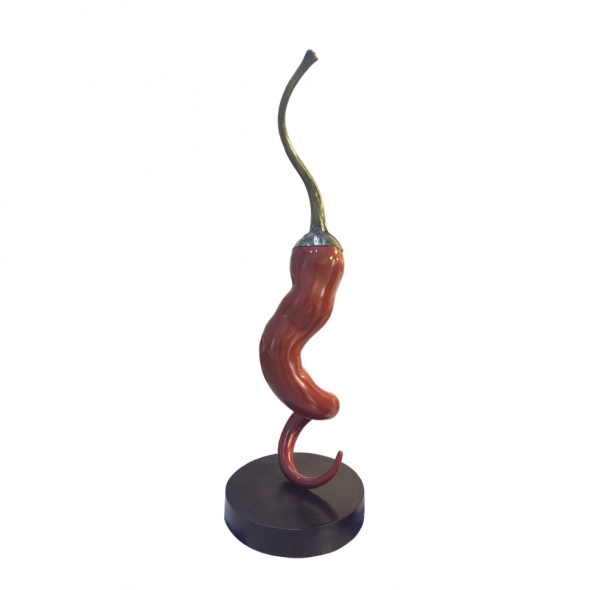
The 3.5-meter-high sculpture, patinated with red and green pigment, is caught in a fluid, twisting movement amidst the white angular architecture of Interlace, conveying a playful and pulsating sensation.
Kumari has always been keen on exploring different types of energy. She discovered that, within the spectrum of taste, the chili stands at the top. It became a metaphor for high energy. The Twist evokes the physical, the earthly, and the bodily energy.
The Melting Pot
Indian Heritage Centre, 2015
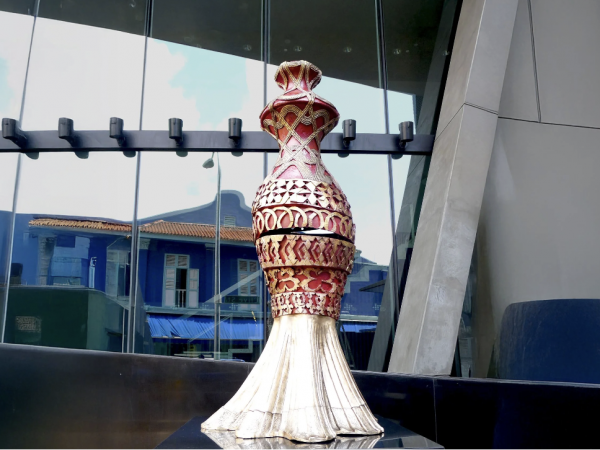
Inspired by the kudam—a traditional South Indian water pot, this sculpture by Kumari Nahappan pays tribute to the heritage of South Asian migrant communities who journeyed to Malaya and Singapore, planting roots and shaping a shared cultural identity. Simple yet resonant, the form evokes a sense of homecoming and belonging.
The sculpture’s flowing lines suggest the movement of people, the exchange of ideas, and expansive trade routes across time. Encircling the form are rings of symbols that reference the cultural imprints and traditions carried by migrants, transformed through generations.
Its placement at the Indian Heritage Centre (IHC) deepens its significance. The kudam not only echoes the architectural motif of the IHC’s step-well–inspired façade but also recalls the communal role of water collection spaces, gathering points of life, dialogue, and shared memory.
More than a static object, the sculpture is a living metaphor for creative energy, cultural confluence, and the ongoing germination of identity. It invites reflection on how people from diverse backgrounds meet, influence one another, and build something new together. As Kumari expresses, this artwork tells the story of a region where many arrived as migrants and, over time, came to call it home.
Appollo
Farrer Park Hospital, 2014
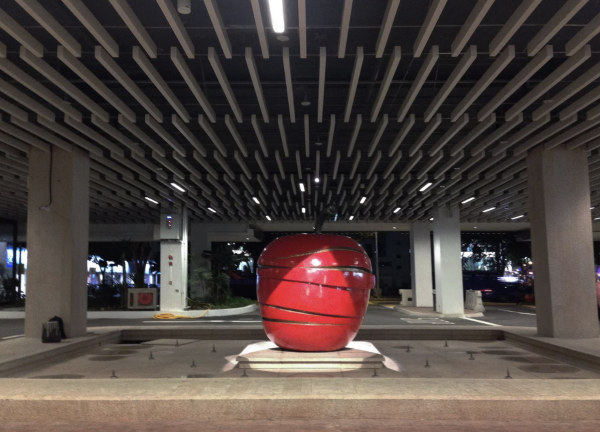
Apollo, the Greek god of healing and medicine, takes the form of a monumental red apple in Kumari Nahappan’s sculpture for Farrer Park Hospital. Positioned in the lobby, the work distils a vast mythological legacy into a single, immediate symbol—warm, welcoming, and quietly authoritative. In Greek tradition, Apollo gifted humanity the knowledge of healing, and the red apple becomes a contemporary emblem of that gift.
Kumari’s choice of simplicity is intentional; the smooth surface, rounded contours, and saturated colour create a sense of calm focus, grounding visitors the moment they step inside. The sculpture embodies the institution’s commitment to fairness, compassion, and holistic care, bridging ancient ideas of wellness with a modern medical environment. In a place defined by vulnerability and hope, Apollo offers a reminder that healing is not only a science but a lineage—one rooted in knowledge, humanity, and the enduring promise of restoration.
Artemis
Connexion, One Farrer, 2014
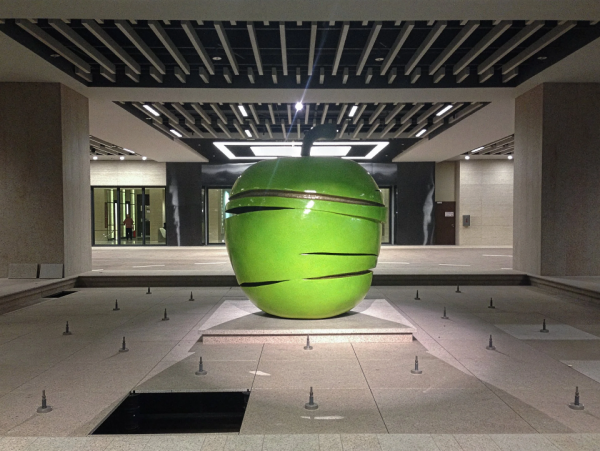
Artemis, twin sister of Apollo, appears in Kumari Nahappan’s companion sculpture as a luminous green apple—an emblem of balance, vitality, and renewal. While Apollo represents the science of healing, Artemis embodies the natural rhythms that sustain it: resilience, protection, and the quiet strength of regeneration. Installed within the Connexion development, the sculpture complements its twin while carrying its own distinct presence.
The green apple radiates freshness and equilibrium, its colour evoking growth and restoration. Kumari’s sculptural language remains elegantly pared down, allowing form and hue to communicate the work’s symbolic depth without ornament. Artemis becomes a visual anchor within a space designed for rest and wellness, reminding visitors that healing is as much about harmony as it is about intervention.
Pembungaan
OUE Bayfront Plaza, Walkway & Lobby, Singapore , 2011
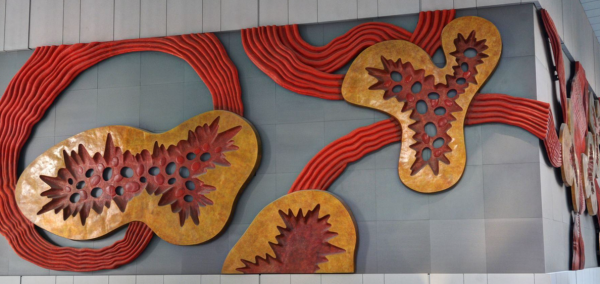
Pembungaan, meaning “blossoming” in Malay, is a monumental mural that celebrates the vitality of nature and its eternal cycles. True to Kumari Nahappan’s practice, the use of a local term grounds the work in Southeast Asian identity, reinforcing the region’s deep ties to land, language, and tradition.
The mural is a visual meditation on life’s rhythms—where every ending carries the seed of a new beginning, from germination to growth and eventual renewal. Inspired by the rich, organic forms found within the chili pepper and the intricate patterns of the nutmeg, Kumari’s flowing vegetal motifs evoke movement, breath, and quiet transformation.
Gracefully unfurling from the façade of OUE@Bayfront into its lobby, the mural creates a sense of continuity between the natural world and urban space. It invites viewers to pause and reflect—on the subtle power of nature, the interconnectedness of all things, and the beauty that emerges when art, culture, and place come together. Pembungaan is more than a decorative work; it is a living, breathing tribute to the regenerative force that underlies all life.
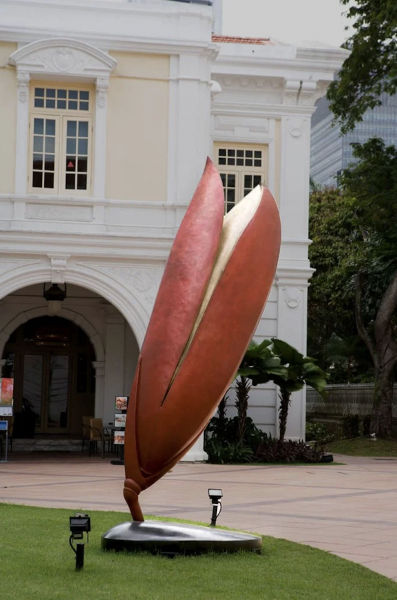
The Golden Grain – Exposed!
The Art House Singapore, 2009
A symbol of life and considered the fruit of the earth, the unassuming rice grain is associated with purity and is seen as a blessing from the divine.
Created in a celebratory mood, the form pays homage to this life-giving source.
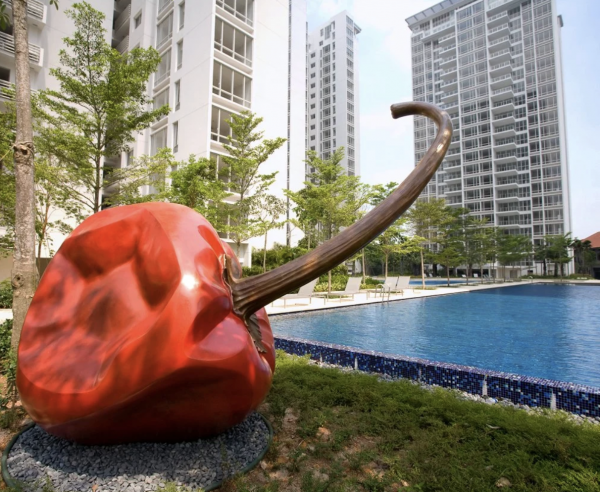
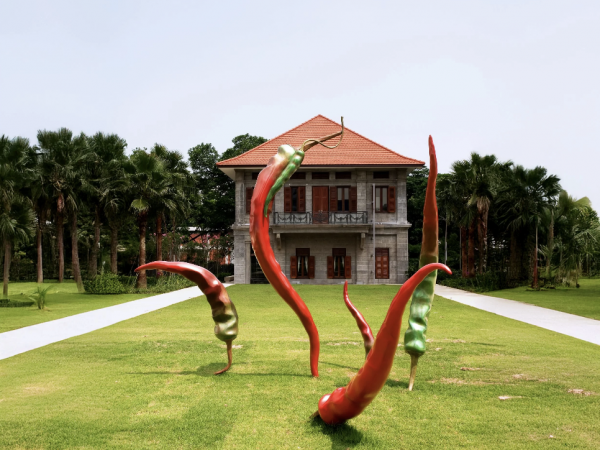
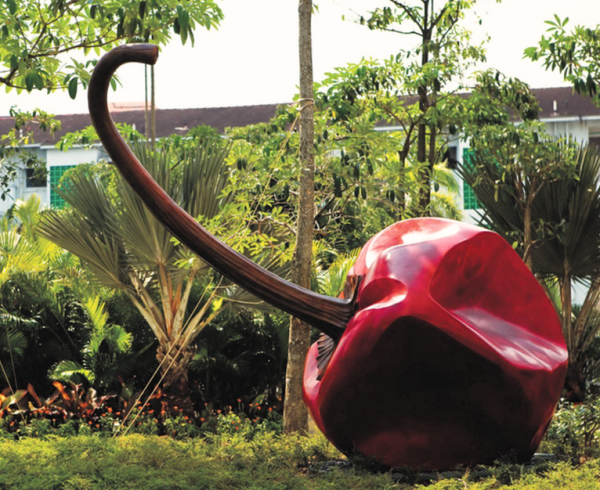
Sizzling & Singing Chillies
The Seaview Condominium, Singapore 2008
Sizzling and Singing Chillies is one of Kumari Nahappan’s most playful public sculptures—an artwork that turns everyday familiarity into a burst of humour, heat, and memory. Oversized chillies spill across the space with an energy that feels almost musical, as if they’re rattling, sizzling, and humming with life.
While light-hearted on the surface, the installation carries deeper threads. The chilli is a staple across Southeast Asian kitchens, a symbol of flavour, warmth, and shared culture. By enlarging it to monumental scale, Kumari transforms a common ingredient into a joyful landmark, reconnecting viewers to personal recollections of home, spice, and family rituals.
The work also speaks to the history of its site. Its whimsical presence invites residents and passers-by to pause, smile, and look again at their surroundings. In doing so, Sizzling and Singing Chillies proves that public art can reshape a place—not with grand statements, but with charm, wit, and the simple pleasure of recognition.
Road to Fifty
Asian Civilsation Museum Singapore, 2007
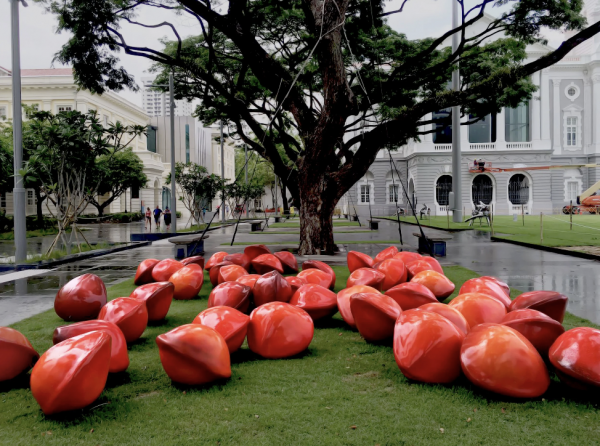
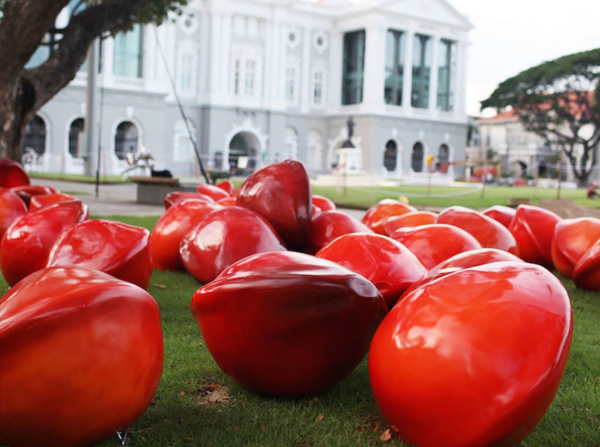
Saga seeds are deeply rooted in Singapore’s history and heritage. For SG50, Kumari displayed 50 blown-up crimson red saga seeds in fiberglass, scattering them throughout Empress Lawn. Each seed represented a year of Singapore’s independence.
Kumari sought to pay tribute to Singapore’s history as an independent state. The seeds were meant to convey a sense of growth and inspire energy in those who encountered them.
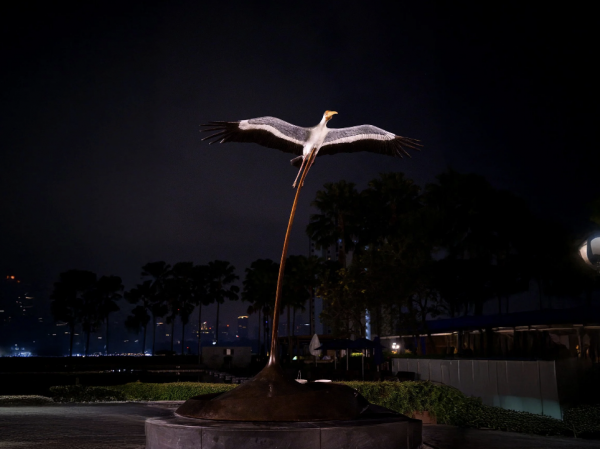
Saranggong
One Farrer Hotel Singapore, 2022
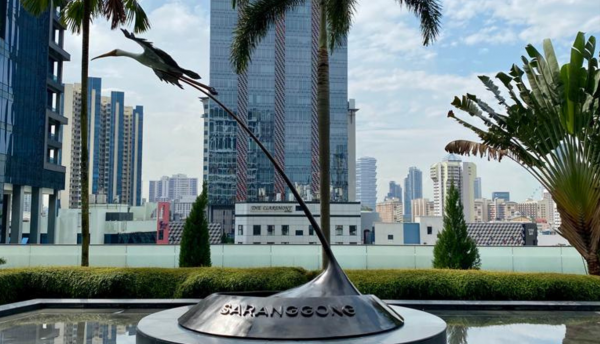
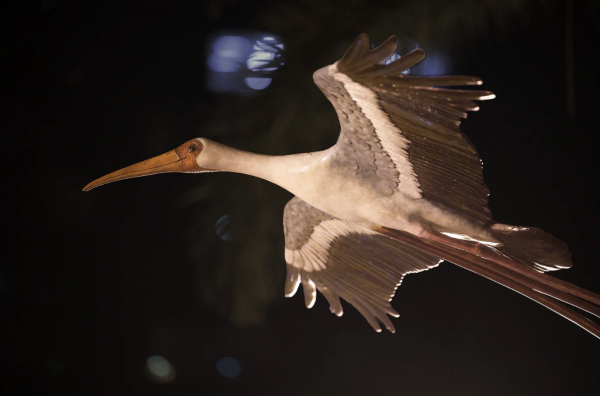
Bearing a rich historical connection to its site, ‘SARANGGONG’ (the Malay name for the stork bird) brings to life the association of a higher spirit. These birds were once commonly seen near the Serangoon River, lending the area its name.
In old-fashioned fairy tales, the stork was known for delivering babies to human beings. As powerful symbols of birth and new life, they also represent protection and motherhood. Their monogamous nature makes them excellent symbols of trust, loyalty, and fidelity.
In Chinese wisdom, being in the presence of a stork is believed to symbolise longevity and prosperity. With the ability to walk, wade, and fly in silence, the stork serves as a profound awakening symbol of life’s values.
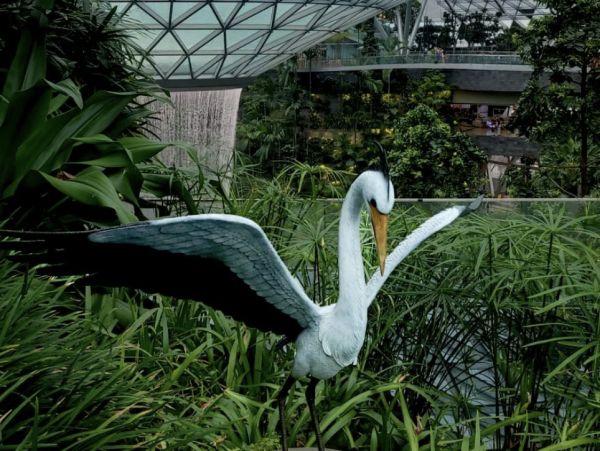
The Heron
Jewel Changi Airport Singapore, 2022
The Grey Heron stands poised in graceful elegance, its wings spread wide as if embracing the bustling crowd at Jewel Changi Airport. Like a plane lifting into flight, the heron’s form captures a moment of quiet strength, symbolizing both patience and power. Its presence, suspended between stillness and motion, invites all who pass by to pause and reflect on the beauty of restraint. The sculpture echoes the quiet resilience found in nature, offering a sense of calm amidst the energy of travel.
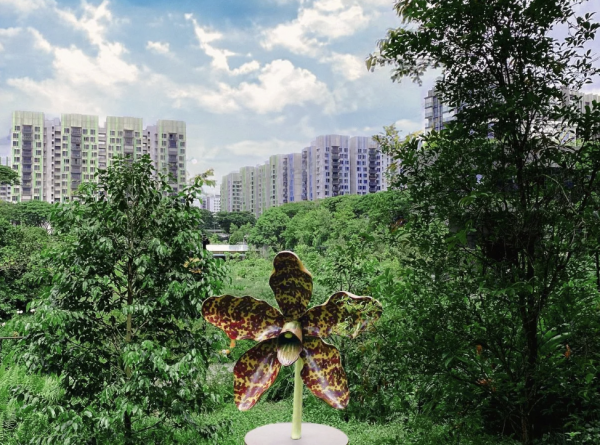
Bunga Bidadari
Bidadari Park Singapore, 2025
The name “Bidadari” means “angel” in Malay. This was once the name of a royal estate, gifted and named by Temenggong Abu Bakar in the 19th century for his wife, Zubaidah, whose beauty reminded him of the mythical beings. Over time, the land became a cemetery, and today, it has transformed again into a park that honours its history while creating space for life to return.
At the heart of this is Kumari Nahappan’s sculpture of the Tiger Orchid (Grammatophyllum speciosum)—a rare and powerful bloom that was once native to Singapore’s forests. Known as the largest orchid species in the world, it can take years to flower and requires very specific conditions to thrive: warmth, humidity, patience. It doesn’t bloom often, but when it does, it’s unforgettable.
Bunga Bidadari captures this spirit. It’s not just a beautiful form. It’s about resilience and timing. About life that takes its time, but comes back stronger. In a place that has seen so many changes, from royal gardens to resting grounds to renewal, this sculpture stands as a marker of quiet strength, holding space for things that grow slowly, and deeply.
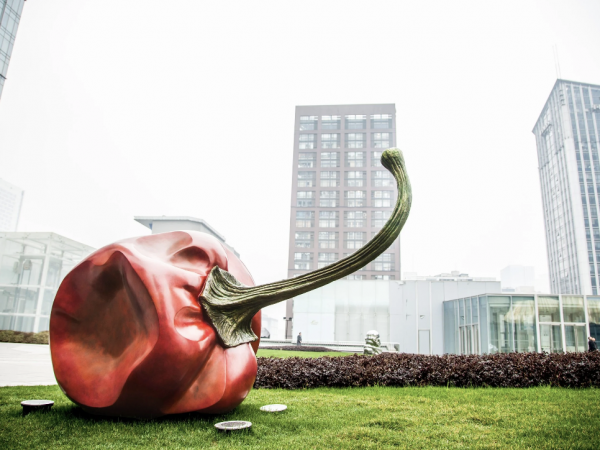
Mala
Chengdu International Financial Square China, 214
Mala (hot and numbing taste), captures the very soul of Szechuan cuisine—the chili, with its slow, sonorous heat, is embodied in the sculpture’s bright, fiery red patinated pigment.
Guardian Angel
The Sanchaya Bintan, Indonesia, 2018
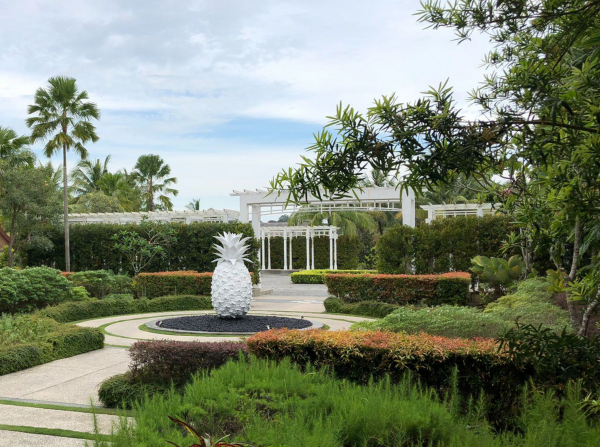
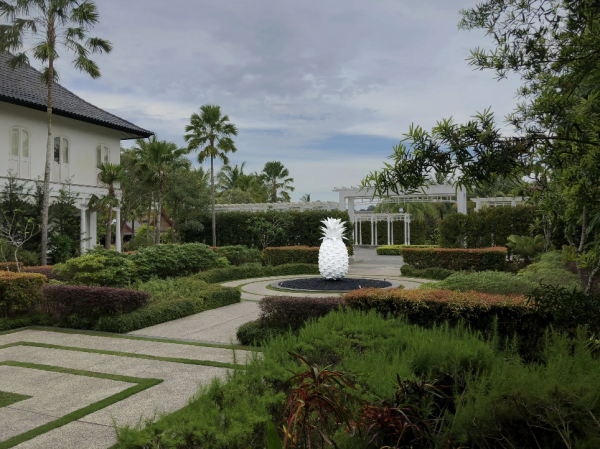
‘Ananas’ celebrates the pineapple, long regarded as a symbol of hospitality in many cultures around the world, thanks to its exotic beauty, rarity, and high demand.
In a similar vein, the Ananas collection was created. Through her art, Kumari has explored the idea of hospitality and comfort, focusing particularly on the skin and form of the pineapple, which is covered in ‘eyes’ on all sides. The pineapple’s textured surface exudes a sense of protection and security, contributing to feelings of home and welcome.
Ode to Thirty
The Sanchaya Bintan Indonesia, 2018
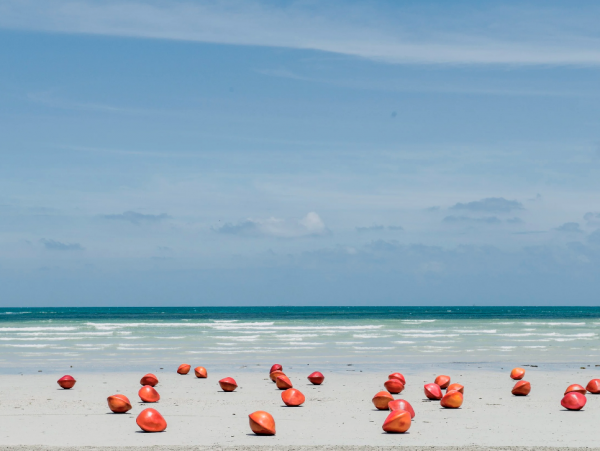
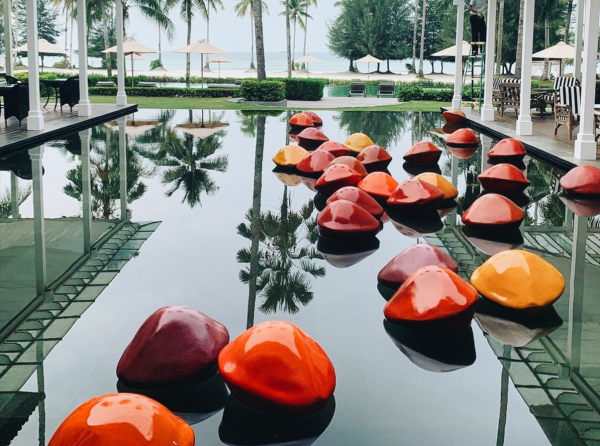
The 30 magnified saga seeds embarked on a long voyage before reaching the shores of Bintan, Indonesia, where they now reside at The Sanchaya. The waves of emotion, the ebb and flow of the tides, and the encouragement of the wind took them across twenty different seas and oceans, navigating from Asia to Europe and then back to Asia again, before reaching their final space at the heart of The Sanchaya. The seeds emanating energy serve as a reminder of the beauty of nature. The seed, an embryonic plant enclosed in its protective outer covering, is waiting to burst with energy. Once settled, the quest to take root becomes primordial to growth, and strength, and pushing forth a path to the future. The life of a saga seed echoes that of the potential of a human soul, endeavouring to exist in this world of ours.
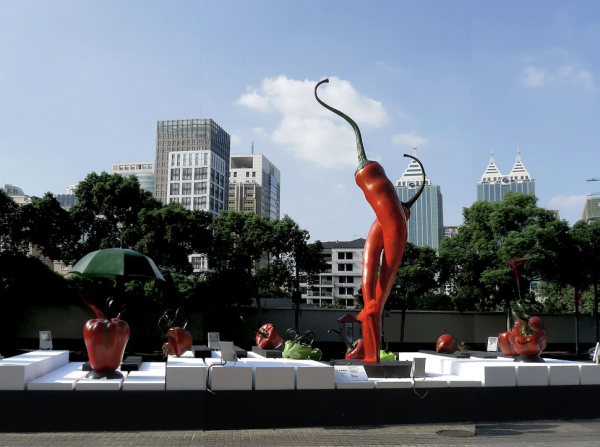
Tango
Changning District, Shanghai, China, 2011
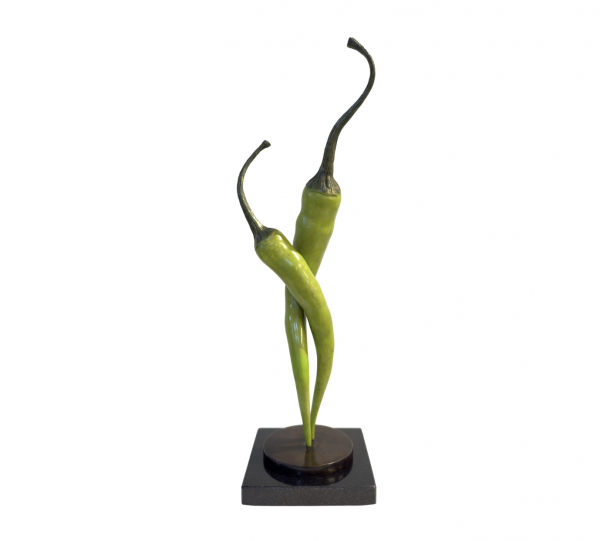
The Tango depicts two bodies expressively and sensually dancing together in a closed position. The bronze pepper sculptures dance with a seemingly austere elegance—exuding exuberance, untapped potential energy, and a playfulness that celebrates the joy of being oneself.
Arousing and stimulating, the performance of the chilies is cathartic, pulsating with an explosive intensity. Accentuated by the chili’s signature red hue, Tango evokes the physical, the earthly, and the bodily.
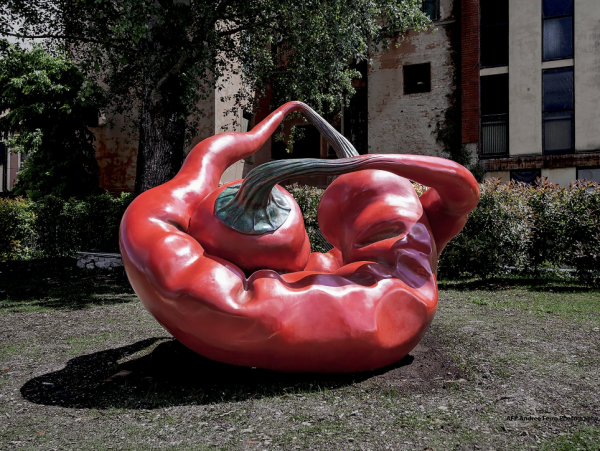
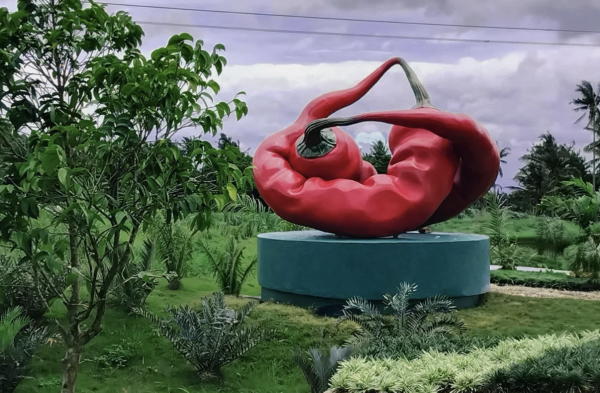
Talktime
Marinaressa Gardens, Venice, Italy, 2019
Del Monte, Bukidnon, Philippines, 2023
Art has the power to bring people together, and Talktime embodies this beautifully. Created on a large scale to leave a lasting impact, this bronze sculpture is designed to age gracefully—becoming a timeless piece that future generations can inherit. At its core, Talktime explores conversation, relationships, and the passage of time. The two interwoven forms, representing a fruit and a spice, symbolise the deep cultural and historical connections that food fosters across generations and traditions.
Having traveled from the Marinaressa Gardens in Venice to the Del Monte pineapple gardens in Bukidnon, Philippines, Talktime continues to engage viewers in new settings, inviting them to connect and spark meaningful dialogue wherever it is displayed. More than just a sculpture, it is a conversation piece—one that bridges time, place, and culture.
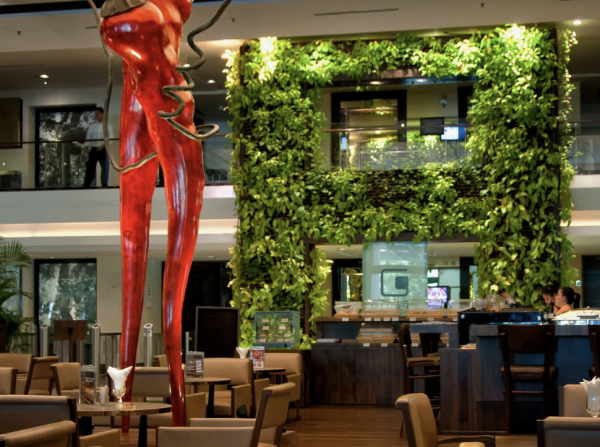
You and Me
G Tower, Kuala Lumpur,2010
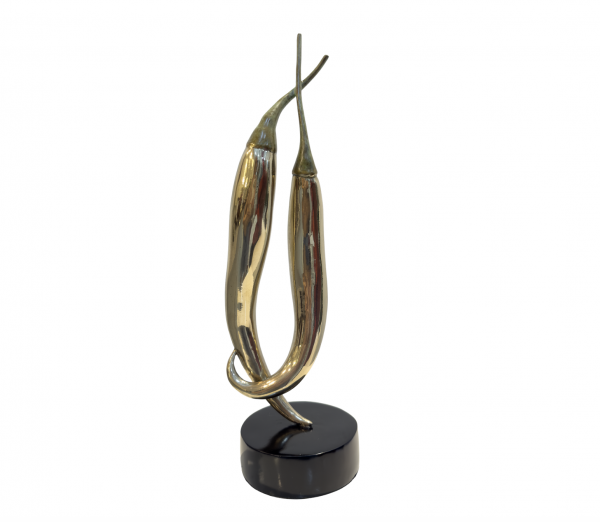
You and Me is a heartwarming celebration of union—of opposites meeting, merging, and conversing. It speaks of connection, communication, and the invisible threads that bind us. Some chillies lean into each other, entwined in intimacy, while others stretch apart, suspended in a charged stillness. Their wild tendrils, like living cords, coil and surge with energy, binding the pair in a vivid, almost visceral embrace. These expressive vines twist, lift, tumble, and spiral—conveying a kinetic bond pulsing with life.
In this dynamic interplay, the chillies seem to waltz in an intimate duet, perhaps a pas de deux, a playful duel, or even a quiet truce. Each chili carries its own character: some flamboyant and extroverted, others calm and magnetic in their restraint. Through this vivid tableau, You and Me captures the beautiful contradictions of relationship—its tensions and harmonies, fragility and strength.
For More Info
📞+65 83891888 / anita@yanggallery.com.sg
www.yanggallery.com.sg